BoxingP4P

P4P Rankings, Statistics and Boxing news.

Discover ourtops P4PVersusPredictionBoxersstatistics
  • Privacy Policy
  • Terms of Use
  • Legal notice

© 2026 BoxingP4P. All metrics, methodology, and rankings are proprietary.

Powered by boxing-data.com; Images of boxers from Wikipedia API.

Page 2 / 4

Fury Cruises Past Makhmudov: Fallen Kings Chasing One Last Payday

Apr 13, 2026

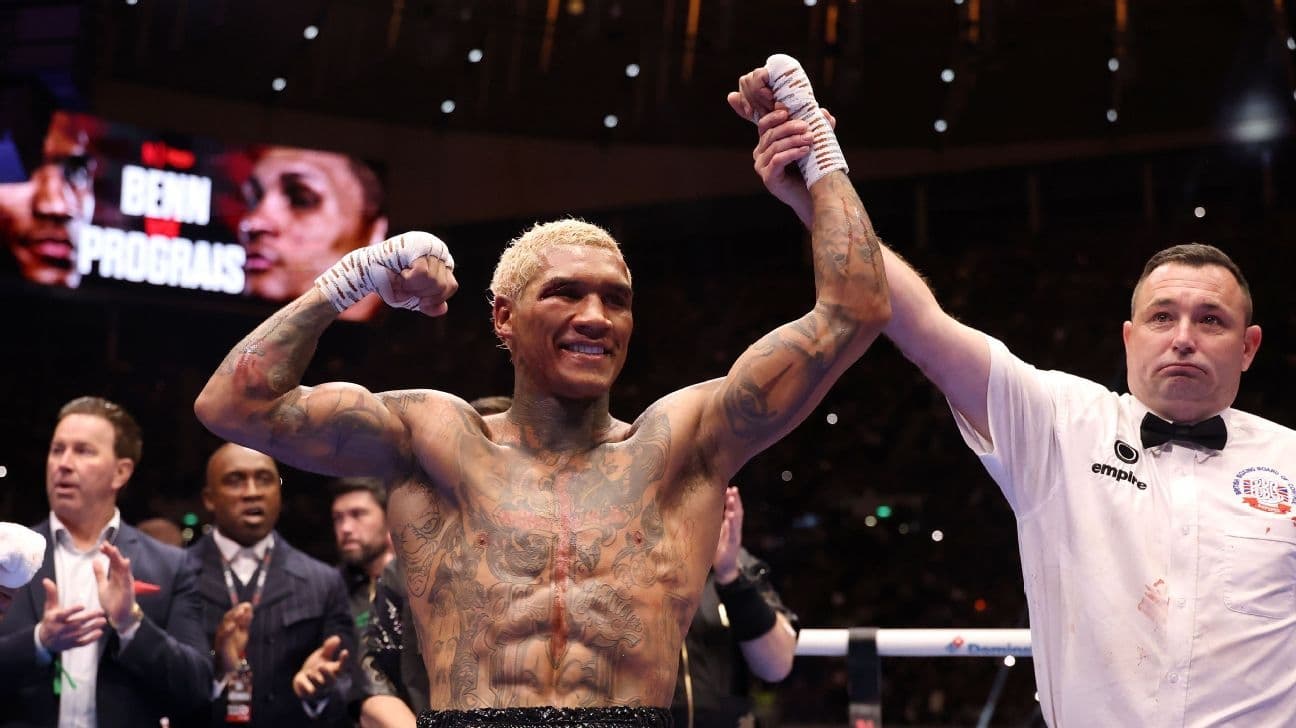
On April 11, 2026, at Tottenham Hotspur Stadium, Tyson Fury made yet another return to the ring after yet another retirement. For this comeback, he chose a tune-up fight against Makhmudov, a Russian-born fighter based in Canada with a classic heavyweight style: aggressive, head-first, hooks and uppercuts flying everywhere, and a genuinely imposing physique. Not a harmless opponent — he was in his prime and had already given some rivals a tough night, even if he had himself been stopped by Kabayel with body shots. For Fury, nothing extraordinary on paper, but a fair test to gauge his level after two long stretches away from the sport. The fight played out predictably: Fury had a far richer and more diverse toolbox than Makhmudov, who did exactly what was expected of him — aggression, pressure, without much technical sophistication. He managed to land on Fury on several occasions, not enough to really hurt him, but enough to raise a few eyebrows. Fury is normally elusive, his head movement one of his trademarks — yet he ate slightly more punches than you'd expect against such a one-dimensional opponent. Despite that, he controlled proceedings with composure: the legs are still there at 37, the jab remains clean, the technique intact. The judges' scorecards confirmed it — 120-108, 120-108, 119-109 — a clear and uncontested victory. The bigger question is punching power. Fury has never been a pure KO artist, but we saw him hurt Wilder and land genuinely damaging shots in their trilogy. Against Makhmudov, he landed repeatedly, yet his opponent never looked truly in danger. Was it a tactical choice — go the full twelve rounds to shake off the rust? Or has the power quietly faded? Hard to say for certain, but it's worth keeping in mind. After the fight, Fury called out Anthony Joshua from the ring, even demanding his presence in the arena. Joshua didn't move — complete silence, no public response, no walk to the ring. That quiet refusal may speak louder than any statement. And that is where the real story begins. What is taking shape is the return of the three fallen kings of heavyweight boxing: Wilder, Joshua and Fury. Before Oleksandr Usyk's takeover, these three were supposed to meet in matchups that would have been colossal, both financially and sportingly. Fury and Wilder delivered their trilogy — memorable and hugely lucrative for both. But Wilder and Joshua never met. And Fury against Joshua, which would have been a massive event on British soil, never happened either. For lack of anything better — the heavyweight landscape is barren since Usyk's dominance, and while the next generation is still knocking at the door — these fights that should have happened years ago may now take place, with obviously far less at stake. But in a division with little to chew on right now, a Fury-Joshua or a Joshua-Wilder is still sellable. These veterans are no longer here to challenge themselves or face the rising generation — they're here to cash one last big check. And you really can't blame them for it.

Nasukawa stops Estrada and puts himself back in the title race

Apr 11, 2026

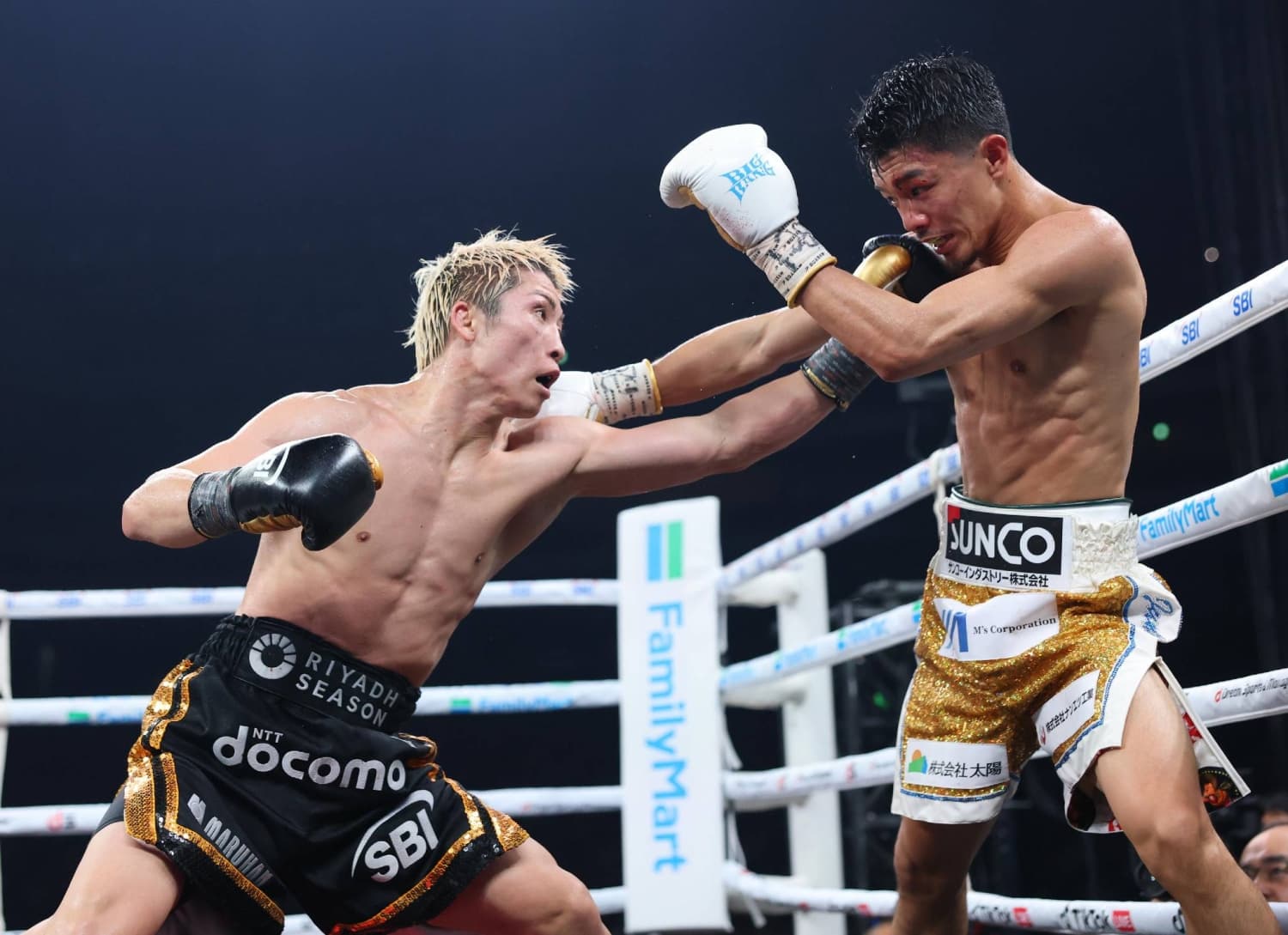
Tenshin Nasukawa produced in Japan the win he badly needed to get moving again. His stoppage of Juan Francisco Estrada after the ninth round immediately restores momentum in the chase for a first world title after the setback against Takuma Inoue. From a distance, the result looks significant: beating a name like Estrada still means something on a resume that is still being built. The Mexican is no ordinary former champion. For years he was one of the elite names in the lower weight classes, with high-level fights against Roman "Chocolatito" Gonzalez and a lasting place in pound-for-pound conversations. For Nasukawa, then, this victory matters. It keeps him from stalling after his first major defeat and puts his world-title project back at the center. The problem is that the fight itself leaves a more mixed impression than the result alone suggests. The version of Estrada seen in the ring looked nothing like the one from his best years. At 35, after the loss to Bam Rodriguez, who had already stopped him, and after moving up in weight, the Mexican looked diminished in several of his historic strengths: less reading of the action, less reaction speed, less sting on the counters. His left hook, long one of his most dangerous shots, was barely seen. His footwork did not look the same either, to the point that he lost balance in unusual fashion more than once. That is exactly why Nasukawa's win demands a stricter reading. Yes, the Japanese fighter was clearly superior. Yes, at times he recovered a more mobile style, with more angles and head movement, in a version closer to what he had shown against Victor Santillan. And just as importantly, it did not look at all like the style he had shown against Takuma Inoue, when he appeared stiffer, more front-facing and more linear. But against such a faded Estrada, more than tidy control could reasonably have been expected. What stands out above all is the physical limit that still accompanies Nasukawa's talent. He has the speed, the movement, the modern southpaw look, the ability to create visually impressive sequences. What he still does not project is the kind of power that immediately changes the opponent's attitude. And that is a real issue. Very quickly, Estrada seemed to understand that he could still take some risks simply because Nasukawa's punches did not look heavy enough to fully deter him. That is where the fight becomes frustrating for the Japanese camp. Even when Nasukawa lands, even when he strings punches together cleanly, the effect is never devastating. At this level, even a boxer who is not a major puncher must at least carry enough threat to command respect. The stoppage also has to be put back into context. The fight was interrupted twice for low blows and then by an accidental clash of heads that badly affected Estrada and seems to have weighed on his decision not to continue. That does not change the fact that Nasukawa was ahead and broadly in control, but it also prevents this win from being presented as a total statement. Especially since Estrada was already coming off a stoppage loss to Bam Rodriguez and Nasukawa still looked bigger, stronger and physically superior on the night. Without that incident, it was easy to imagine Estrada going the full twelve and losing a wide decision. That is why the night ultimately leaves a double image of Nasukawa. On one side, he clearly puts himself back into the hierarchy and confirms that he has the technical tools to remain a credible figure on the world scene. On the other, he still does not fully answer the central question: how far can he go in boxing if he cannot give his style more real weight? Against the shadow of a great Estrada, he won. To convince people that he can one day settle at the very top, he will probably have to do more than simply win.

After Usyk: the heavyweight division in ruins

Apr 6, 2026

Oleksandr Usyk's run has left the heavyweight division in a rare state of fragility, to the point that the fight between Deontay Wilder and Dereck Chisora mostly served as a revealing picture of the current emptiness. For ten, maybe even fifteen years, heavyweights have been tied to a certain physical model, almost a caricature of boxing's glamour division. From the Klitschko era through Anthony Joshua, Deontay Wilder, Daniel Dubois, Joseph Parker and Tyson Fury, the division was shaped by gigantic men, very tall, very powerful, sometimes a little stiff in rhythm, but always able to impose an overwhelming sense of physical force. That image stood in contrast with the heavyweights of earlier decades, who were more mobile, more varied, and closer in the collective imagination to figures like Muhammad Ali, Mike Tyson or Lennox Lewis. And yet this generation of giant heavyweights did not always set the public on fire. It often created an impression of robotic power, a form of boxing that was spectacular because of size, but less alive in style, less rich in movement, less surprising in exchanges. It was into exactly that landscape that Usyk arrived. A former cruiserweight, with a respectable frame but nothing extraordinary for a modern heavyweight, he did not fit the prototype that was supposed to rule the division. In theory, he was meant to be the brilliant and courageous technician who would still be too small to fully impose himself at the top. In practice, he beat everyone. He beat Tyson Fury twice, after Fury had beaten Wilder twice. He beat Anthony Joshua twice, even though Joshua remains one of the defining heavyweights of the last fifteen years. He also beat Daniel Dubois twice, even though Dubois had long been presented as part of the division's future. In just a handful of fights, Usyk did not merely win belts or add major names to his resume. He undermined the dominant model of the modern heavyweight itself: the giant supposedly too big, too strong and too physical to be undone by technique, ring intelligence and control of tempo. The problem is that after his run, there is not much left that feels like an immediate and credible succession. This weekend, the fight between Wilder and Chisora offered a fairly sad image of what remains behind them. Wilder, once technically limited but terrifying because of his right hand, no longer seemed capable of producing what once made him unique. Watching him fail to stop an aging Dereck Chisora, who no longer belongs at the summit of the division, says something about the current decline. And the fact that such a fight can still take up so much media space also shows how badly the division now lacks fresh and credible marquee bouts. One could even argue that the true climax of heavyweight boxing over the last ten years remains the Tyson Fury-Deontay Wilder trilogy. The first fight produced that now-mythic image of Fury rising in the twelfth round after the knockdown. The two that followed extended the same feeling of chaos, swings, drama and pure spectacle. That may have been the division's last truly massive entertainment peak. Then Usyk arrived and swept that whole drama aside with something else: technique, control, composure, and still a very real ability to hurt opponents, as he showed against Fury, Joshua and especially in his second knockout win over Dubois. From there, the question becomes almost brutal: what is left after him? Of course the division will eventually rebuild itself, and there are a few names, like Moses Itauma, who can still create a small sense of hope. But in the short term, the dominant impression is that of a field of ruins. The old reference points are worn out, the old threats no longer frighten anyone, and the next truly big fights are not yet clearly taking shape.

Moses Itauma leaves little doubt against Franklin Jr

Mar 31, 2026

On March 28, 2026, Moses Itauma delivered the expected result against Franklin Jr in England, in a fight that mainly confirmed what many observers already saw in him: major potential, but also the need to stay measured before pushing the hype too far. At just 21 years old, Itauma remains one of the most intriguing prospects in the heavyweight division. His size stands out, of course, but that is not the most important part. What really catches the eye is his hand speed. For a heavyweight of that frame, seeing combinations come that quickly, reactions stay that clean and upper-body movement look that fluid is naturally striking. As a southpaw, he already appears technically well built: jab, lead hook, back-hand variation, level changes, body work and head work all connect with real coherence. Against Franklin Jr, that technical edge showed without much resistance. Itauma controlled the fight, imposed his rhythm and finished matters with a clean knockout after already putting his opponent down earlier in the contest. On that front, there is very little to criticize: the performance was serious, tidy and fully under control.

Takuma Inoue vs Kazuto Ioka: no holidays in the Inoue family

Mar 30, 2026

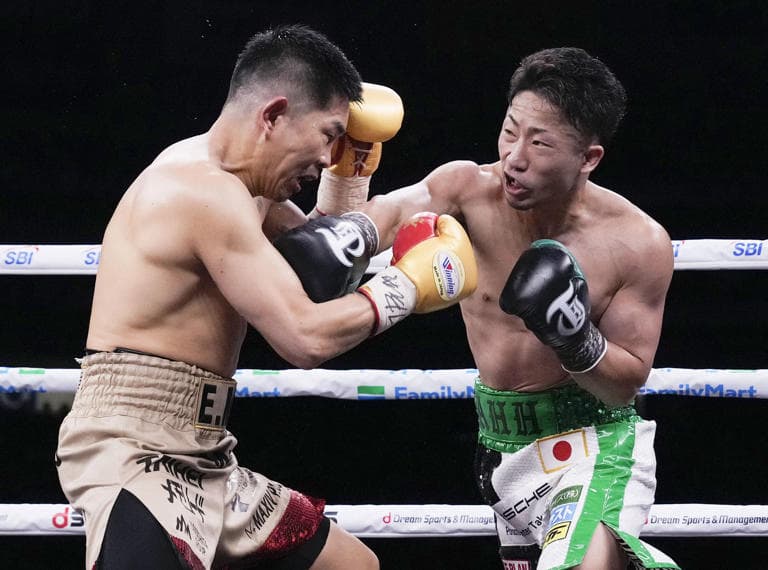
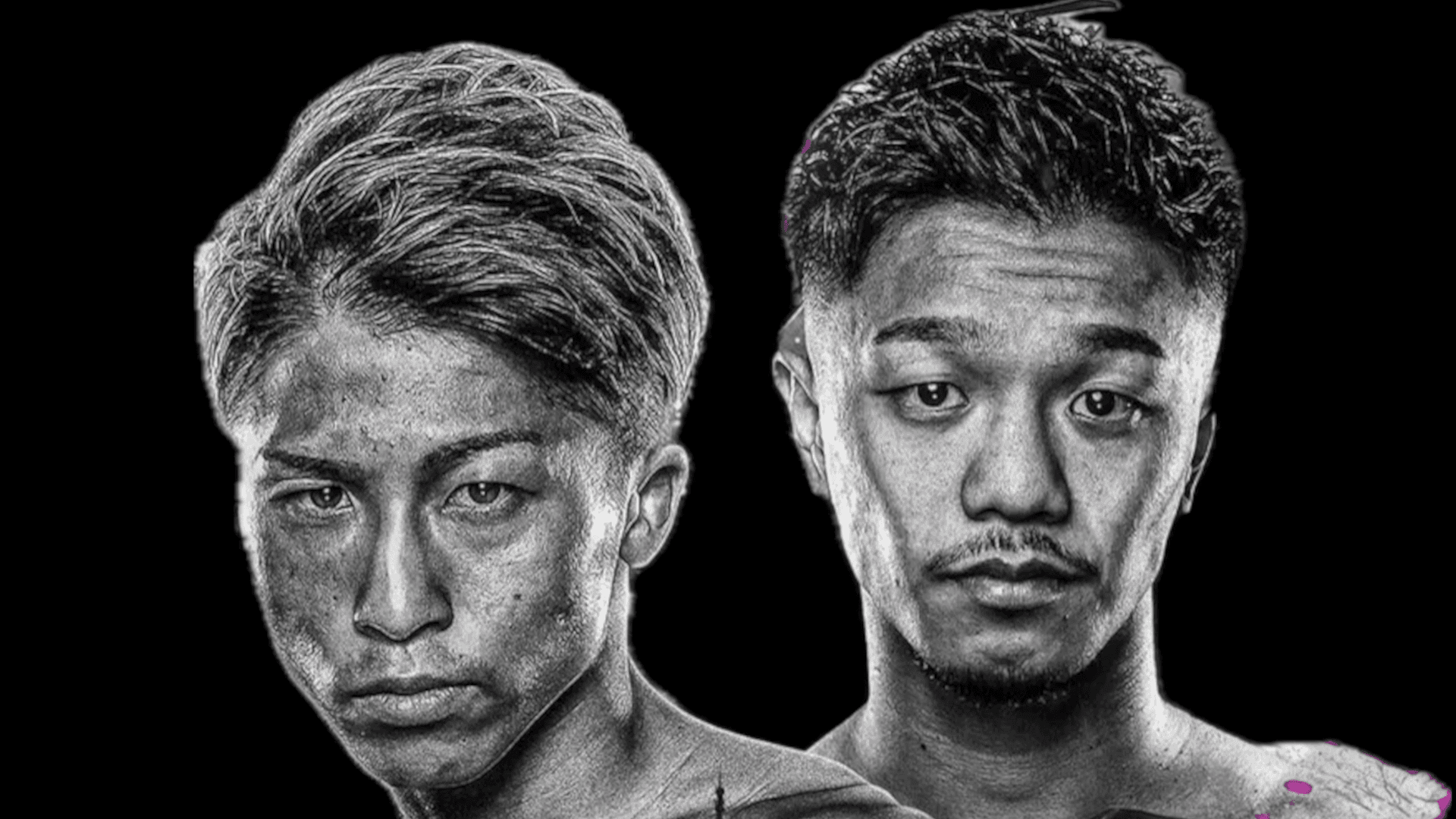
_Scheduled for May 2, 2026, the fight between Takuma Inoue and Kazuto Ioka already looks like one of the year's standout events in Japan. It may not be the most heavily promoted clash outside the country, but it is a major matchup between two names that truly matter in contemporary Japanese boxing._ What makes this fight especially compelling is Takuma Inoue's position going into it. After regaining a world title with his impressive win over Tenshin Nasukawa, he could easily have chosen a safer first defense, a more cautious and managerial kind of move. Many fighters in that situation would have looked to enjoy the belt a little, secure one or two favorable outings and settle gradually into a new reign. But that clearly is not how the Inoue family operates. Their logic seems to be simple: if a serious challenge is there, you take it. That decision carries even more weight because Takuma Inoue's career had recently seemed to be entering a more uncertain phase. After his loss to Seiya Tsutsumi, it was easy to read him as a fighter drifting backward, a champion on the verge of sliding quietly into the second tier. His win over Nasukawa completely changed that reading. It reminded people that beyond the famous surname, Takuma Inoue is still a very high-level boxer, capable of imposing disciplined, rigorous and efficient boxing against a more spectacular opponent who was less stable in his tactical answers.

Previous
Next