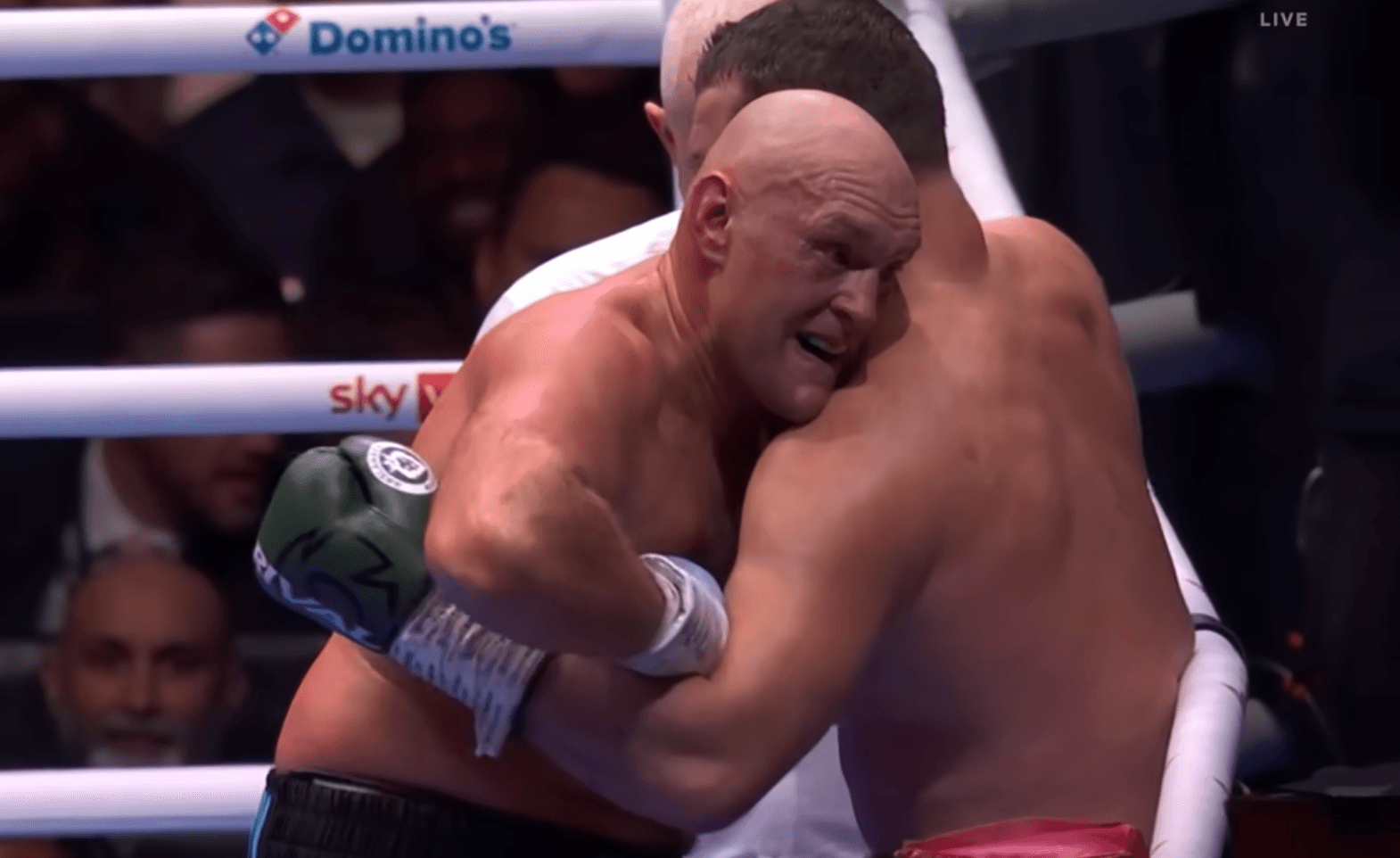
On April 11, 2026, at Tottenham Hotspur Stadium, Tyson Fury made yet another return to the ring after yet another retirement. For this comeback, he chose a tune-up fight against Makhmudov, a Russian-born fighter based in Canada with a classic heavyweight style: aggressive, head-first, hooks and uppercuts flying everywhere, and a genuinely imposing physique. Not a harmless opponent — he was in his prime and had already given some rivals a tough night, even if he had himself been stopped by Kabayel with body shots. For Fury, nothing extraordinary on paper, but a fair test to gauge his level after two long stretches away from the sport. The fight played out predictably: Fury had a far richer and more diverse toolbox than Makhmudov, who did exactly what was expected of him — aggression, pressure, without much technical sophistication. He managed to land on Fury on several occasions, not enough to really hurt him, but enough to raise a few eyebrows. Fury is normally elusive, his head movement one of his trademarks — yet he ate slightly more punches than you'd expect against such a one-dimensional opponent. Despite that, he controlled proceedings with composure: the legs are still there at 37, the jab remains clean, the technique intact. The judges' scorecards confirmed it — 120-108, 120-108, 119-109 — a clear and uncontested victory.
The bigger question is punching power. Fury has never been a pure KO artist, but we saw him hurt Wilder and land genuinely damaging shots in their trilogy. Against Makhmudov, he landed repeatedly, yet his opponent never looked truly in danger. Was it a tactical choice — go the full twelve rounds to shake off the rust? Or has the power quietly faded? Hard to say for certain, but it's worth keeping in mind.
After the fight, Fury called out Anthony Joshua from the ring, even demanding his presence in the arena. Joshua didn't move — complete silence, no public response, no walk to the ring. That quiet refusal may speak louder than any statement. And that is where the real story begins. What is taking shape is the return of the three fallen kings of heavyweight boxing: Wilder, Joshua and Fury. Before Oleksandr Usyk's takeover, these three were supposed to meet in matchups that would have been colossal, both financially and sportingly. Fury and Wilder delivered their trilogy — memorable and hugely lucrative for both. But Wilder and Joshua never met. And Fury against Joshua, which would have been a massive event on British soil, never happened either. For lack of anything better — the heavyweight landscape is barren since Usyk's dominance, and while the next generation is still knocking at the door — these fights that should have happened years ago may now take place, with obviously far less at stake. But in a division with little to chew on right now, a Fury-Joshua or a Joshua-Wilder is still sellable. These veterans are no longer here to challenge themselves or face the rising generation — they're here to cash one last big check. And you really can't blame them for it.