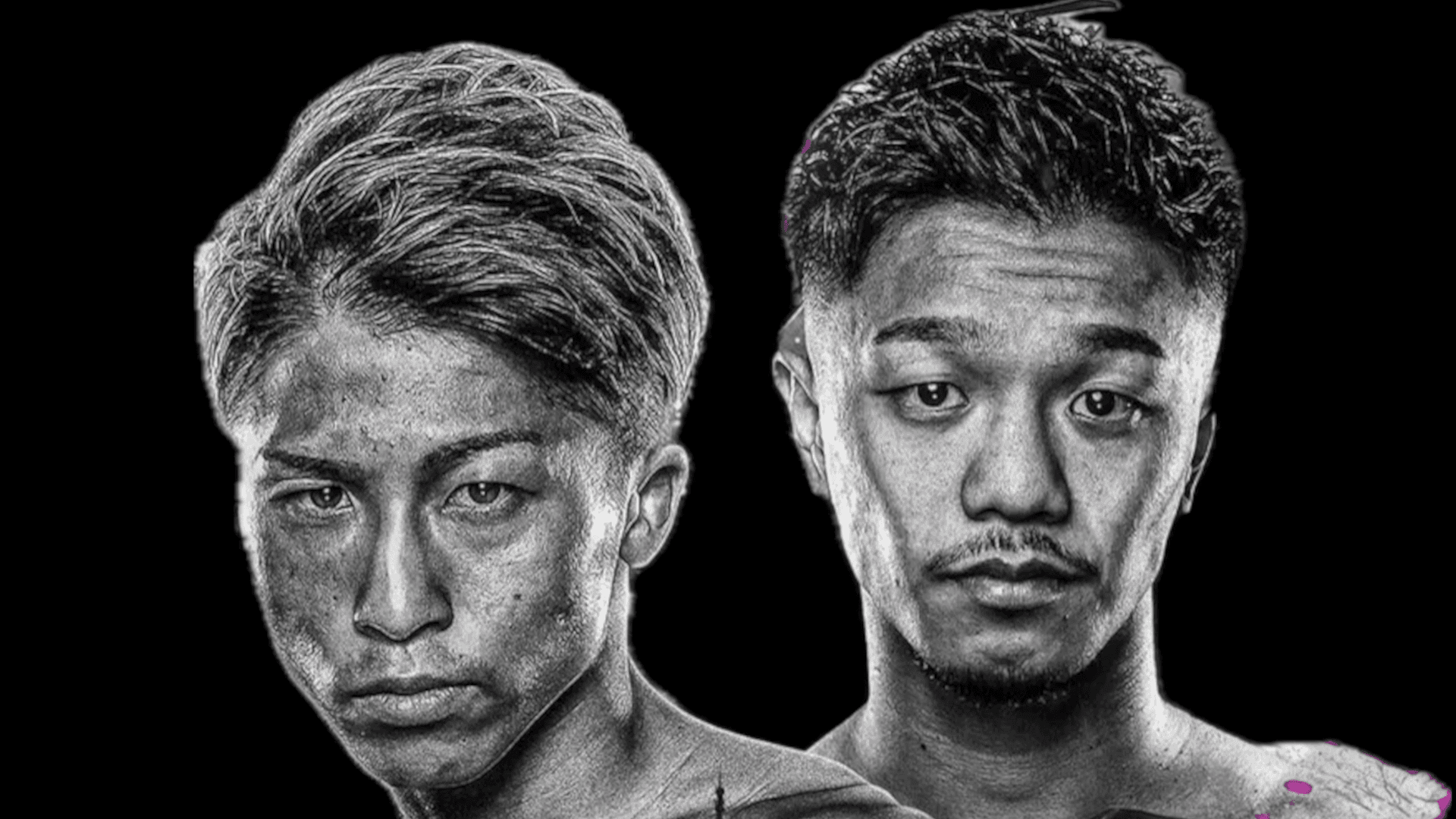
Scheduled for May 2, 2026 at around 11:00 a.m. in France, Inoue vs Nakatani has the feel of the kind of fight we do not get often enough, but that Japanese boxing still seems capable of producing. Two unbeaten fighters, two 32-0-0 records, an all-Japanese matchup, and a sporting stake that goes far beyond local prestige. On paper, the fight is almost ideal: Naoya Inoue has little left to prove, apart from continuing to give concrete shape to his place among the great fighters of his era, while Junto Nakatani enters with the aura of a fascinating challenger, dangerous, unusual, accomplished enough for the matchup to be fully credible, yet still mysterious enough to leave several scenarios on the table. This fight also says something broader about Japanese boxing, which for several years has looked like one of the liveliest scenes in the sport. The cards are ambitious, risks are accepted more regularly, and the best fighters often seem less protected by the logic of undefeated records than in other markets. Inoue-Nakatani fits that pattern: it is not only a major fight between two names, but a showcase for what boxing can still be when it accepts real sporting demand.
There is, however, one major reservation: timing. This fight may be happening because it had to happen now or never. Nakatani was already struggling to stay at 118 pounds, while Inoue is also beginning to reach the limits of the 122-pound division. If their weight trajectories start moving in different directions, the window could close quickly. Commercially, the matchup is obvious; sportingly, it is too. But the real question is whether Nakatani is arriving at the best possible moment to challenge such a complete fighter. His most recent fight against Hernandez left a mixed impression: he showed his usual quality in the early rounds, with clean movement, genuine technical control and clear superiority in several sequences, but he could not do what he so often does, which is break the opponent before the fight truly settles. Hernandez held on, came forward, applied pressure, and forced Nakatani to deal with a tougher reality: at 122 pounds, his punches remain dangerous, but they do not necessarily produce the same immediate effects. Many punchers discover, when moving up in weight, that their power does not disappear but changes in nature. Opponents absorb better, rounds stretch out, and dominance has to become more constructed.
Inoue has gone through that evolution himself. In the lower divisions, he could sometimes destroy opponents with almost unreal brutality; higher up, he has had to accept other forms of victory, sometimes over distance, sometimes through accumulation, sometimes by managing risk more carefully. The difference today is that he has already proved he can do it. Against Akhmadaliev, he showed he could control a fight over twelve rounds. Against Picasso, he chased the knockout, but also adapted when his opponent resisted. That maturity may be his most impressive quality at this stage of his career: Inoue is no longer just a destroyer, he is a fighter capable of reading, correcting, slowing down, accelerating and taking back control when a fight does not follow the initial plan. Nakatani, by contrast, is intriguing precisely because he does not always look spectacular at first glance. His boxing can seem almost nonchalant, with the sense that he moves at his own rhythm, as if refusing to be dragged into the urgency of the fight. Then the punches arrive, heavy and precise, and it becomes clear why his record is still intact. That stylistic strangeness is probably his best chance: he is not merely a taller or longer version of a familiar profile, he imposes a different tempo, a less immediate read, a way of landing that can surprise even elite fighters.
Against Inoue, that uniqueness will still have to become concrete answers. Nakatani will need to use his height and reach, stop Inoue from entering too easily, and above all avoid abandoning the things that make him dangerous. Some taller opponents have made the mistake of shrinking themselves, boxing smaller than they are, and giving Inoue the distance he wanted. Against a fighter this explosive, that kind of concession is expensive. The best-case scenario for Nakatani seems clear: catch Inoue as he comes in, with a clean straight shot, a well-timed rear hand or a short hook slipped inside a combination. Inoue takes risks when he attacks. His defense is excellent, but his aggression naturally opens windows, and both Nery and Cardenas have already put him on the floor. The question, then, is not whether Inoue can be hit. He can. The question is whether Nakatani can hit him hard enough to prevent him from immediately retaking control, because this is where Inoue's aura becomes almost intimidating: his knockdowns have not really weakened his image, they have sometimes strengthened it. He goes down, takes the count, rises with a clear head, then resumes the fight with a coldness that must be terrible for an opponent to feel. Against him, landing a shot is not enough. You need to create a definitive rupture.
For Inoue, the approach may therefore be more progressive than expected. He could look to target the areas damaged in the Hernandez fight, especially around the eye, build methodical pressure and turn the matchup into a fight of accumulation. He knows Nakatani is dangerous with one shot, but he also knows his opponent showed a moment of drift when the physical and mental pressure intensified. In a fight this important, that detail can matter. The logical pick remains Inoue, perhaps by stoppage around rounds 9 or 10 if his pressure eventually wears Nakatani down, perhaps on points if he chooses a more cautious and tactical reading. But this fight deserves more than an overly simple conclusion. Nakatani has enough quality, reach and strangeness to make the matchup compelling. He is not merely there to complete the scenery for another Inoue showcase. That is exactly what makes the anticipation exciting: the hope, deep down, is not only to see Inoue win or Nakatani spring the upset, but to see a real fight, a moment when two unbeaten boxers are forced to answer something they do not often encounter. If the matchup lives up to its promise, it can become more than a major Japanese event: it can open a rivalry, perhaps even a story in several acts.