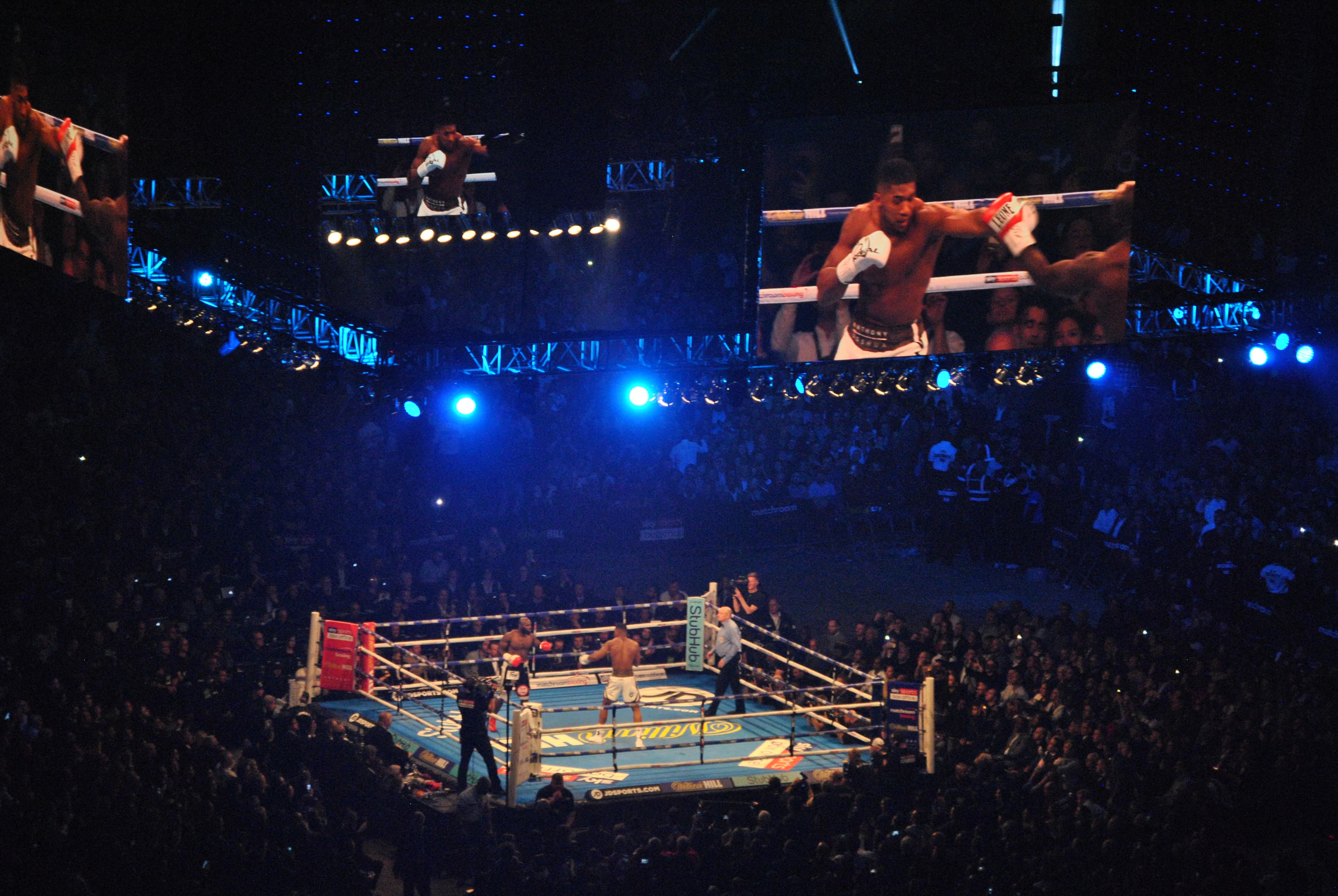
On Friday, December 11, 2026, Cardiff’s Principality Stadium will perhaps close an entire chapter in British boxing. Around 80,000 spectators, a retractable roof, a worldwide broadcast on Netflix and, at the center of it all, Anthony Joshua and Tyson Fury: on paper, everything is in place to create the event British fans have been waiting years to see. Yet the fight arrives at a moment when both protagonists are virtually retired and when the sporting stakes have lost most of their substance. No title will be on the line, no rematch is planned according to Eddie Hearn and Spencer Brown, and this is no longer a meeting designed to determine which man stands at the peak of his powers. It is primarily about turning two names that have become enormous into one final major commercial occasion. That is precisely where the contradiction lies: Joshua–Fury is no longer the fight that was supposed to define a generation, but it remains the biggest British boxing event of the year, perhaps precisely because it represents the end of an era as much as a clash between two former heavyweight kings.
Joshua arrives in Cardiff with a sporting status profoundly different from the one that fueled the idea of a showdown with Fury for so many years. The 2012 Olympic champion, a London gold medalist and multiple-time heavyweight champion, suffered defeats to Oleksandr Usyk and Daniel Dubois before rebuilding his trajectory with his victory over Jake Paul in December 2025. His record now stands at 30 wins, 4 losses and 27 victories inside the distance, but the numbers do not tell the whole story. In July 2026, in Jeddah, his fight with Kristian Prenga produced the clearest image of his decline: Joshua was dropped twice in the opening round before stopping Prenga in the second. For a fighter who will be 37 on fight night, that sequence carries more weight in the perception of his present than the years of dominance that built his name. The question is no longer whether Joshua can embark on another sporting conquest, but how far his immense commercial value can still carry an event whose appeal now rests largely on what he once represented.
Fury, too, is reaching the end of his competitive story. A multiple-time heavyweight champion, he faced Usyk twice in 2024 and lost both contests, then announced his retirement in January 2025 before returning to the ring. His points victory over Makhmudov in April 2026 marked his comeback, followed by a preparation fight against Mariusz Wach in Thailand in July, extending this final stretch of his career. His 36-2-1 record remains that of a fighter who spent a long period at the top of the heavyweight division, but his recent path no longer suggests that major surprises are waiting to be revealed. At 38, Fury is no longer being presented as an enigma to solve or as the champion capable of overturning the world order. He arrives with a legacy, a personality and an enduring ability to command attention, but Joshua–Fury looks less like a new adventure than the final exploitation of a rivalry that never took place when both men were simultaneously at their peak.
That disconnect is what gives the event its almost twilight-like character. Sporting urgency has disappeared because no title is at stake, and the fight does not even carry the commercial safety net of a contractual rematch: Hearn and Spencer Brown have said there is no rematch clause. What remains, then, is the event itself, the names, the memories and the drawing power of two careers that shaped British heavyweight boxing. Joshua insisted that the fight take place in the United Kingdom, according to Hearn, and Cardiff provides the ideal setting for this final major performance. The Principality Stadium, with its capacity of around 80,000 and its retractable roof, turns the contest into a national spectacle before the opening bell has even sounded. General ticket sales are due to open around October 9, 2026, at noon BST, while Netflix will broadcast the fight worldwide, further proof that the scale of the occasion now extends far beyond the sporting arena.
Around the ring, the promotional structure tells another story, one about a market in which the boundaries between traditional boxing, global events and entertainment have become increasingly blurred. The BBBofC lists Queensberry, Matchroom and Sela as promoters, while Dana White and Zuffa are also claiming a role in the promotion and production, an involvement Eddie Hearn disputes. The battle over promotional control says a great deal about the value of Joshua–Fury: when the sporting stakes are no longer sufficient on their own, control of the event becomes a major commercial prize. The fight can therefore be sold without a title, without a guaranteed rematch and without any genuine promise of sporting revelation, because Joshua and Fury still possess the kind of recognition capable of turning a night into a global media event. Netflix is not simply broadcasting two fading careers; the platform is taking on a matchup whose power comes precisely from all the years in which these two men represented the center of British heavyweight boxing.
There would therefore be little point in pretending that Joshua–Fury is still the fight it could have been several years ago. It is not a sporting summit, and it would be equally artificial to present it as a battle destined to reshape the world heavyweight hierarchy. Joshua is now a fighter whose sporting trajectory appears to be nearing its conclusion, while Fury has already experienced an announced retirement, two defeats to Usyk and a comeback that looks more like a final chapter than the construction of another reign. But that absence of illusion is exactly what makes the matchup distinctive. Neither man needs to pretend that he is beginning something: they are finishing. On December 11, Cardiff will therefore not simply host a clash between two heavyweight stars; the stadium will provide the stage for a kind of collective farewell to a generation of fighters who occupied the center of the boxing landscape for years.
Joshua–Fury will ultimately be what modern sport can sometimes produce when a career reaches its final stage: a huge event whose emotional and commercial value exceeds its competitive importance. Both men are virtually retired, no title will be there to crown the winner, and nothing guarantees that the result will alter their place in history. Yet when the roof of the Principality Stadium opens or closes over those 80,000 spectators and Netflix broadcasts the fight around the world, something will remain that statistics cannot measure. It will be the final opportunity to see Joshua and Fury share a ring, after years in which the two men represented different paths to stardom in British heavyweight boxing. It may not be the most exciting fight from a sporting standpoint, but it is the one that allows an era to look at itself in the mirror one last time before disappearing.